

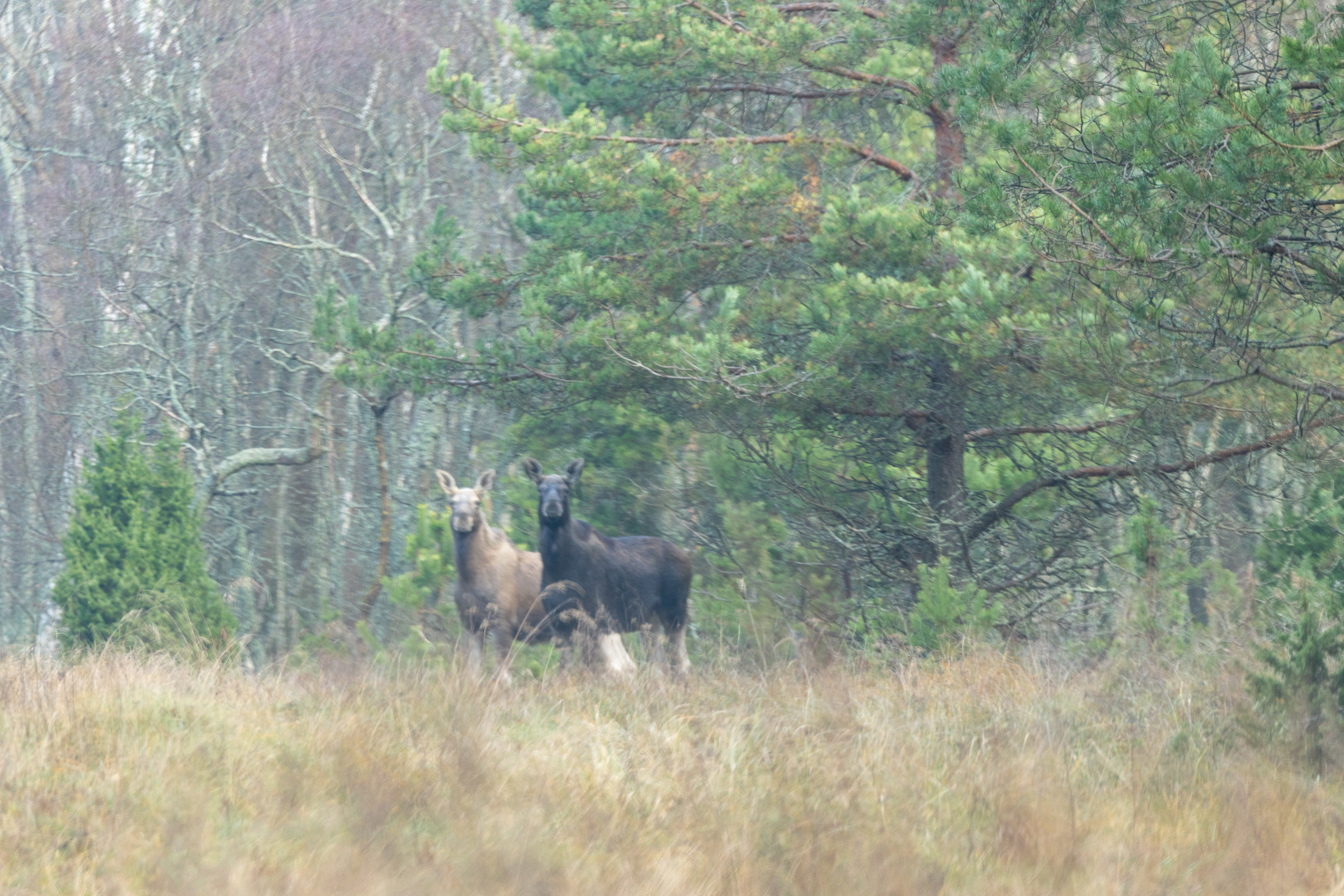
The symbol of the Curonian Spit forests is the European moose (Alces alces).
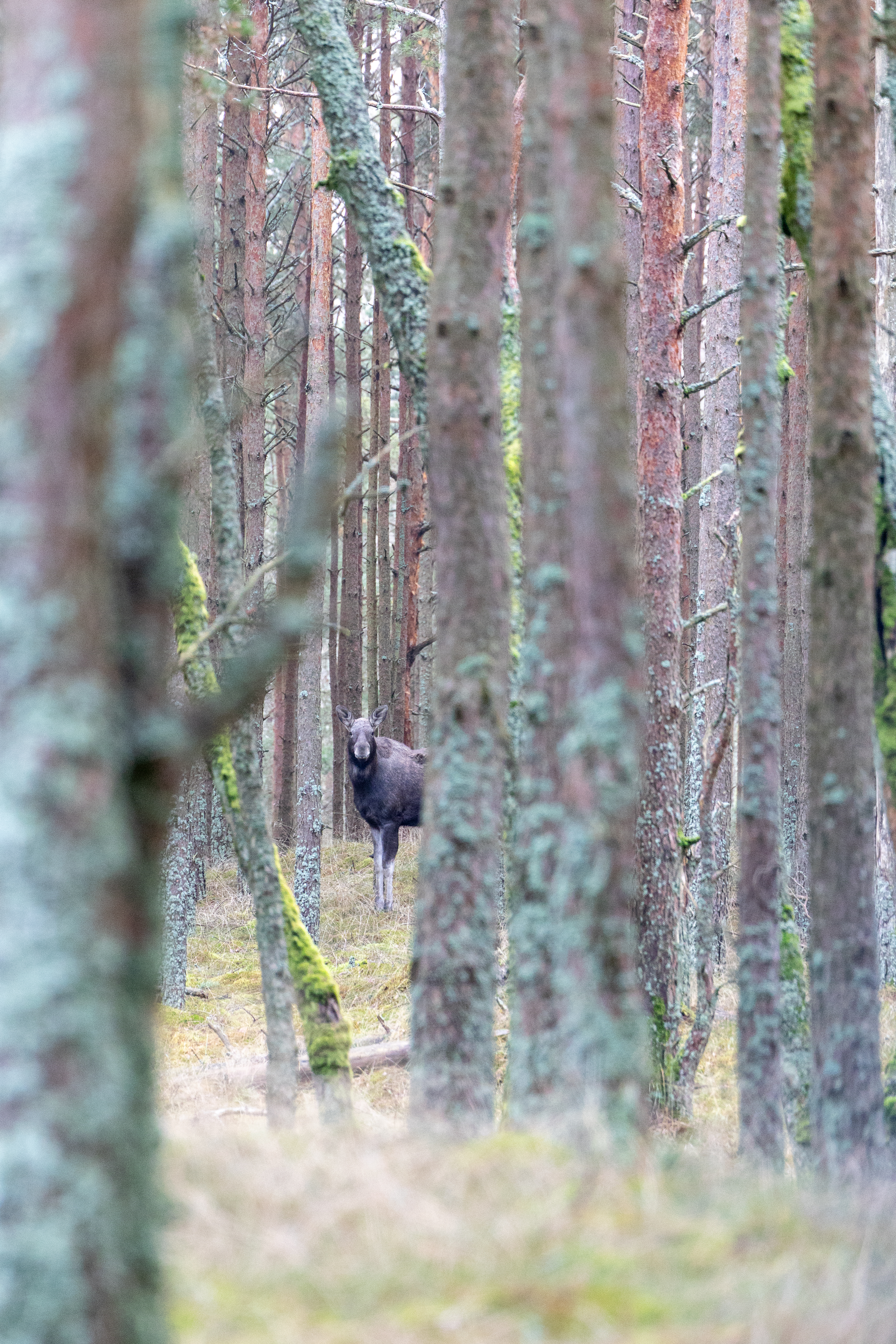
The moose is the largest animal living in the forests of the Curonian Spit. The body of the moose is massive and tall; it can reach 1.8 - 2.1 m at the withers. Its legs are long and strong, with large, broad, soft, and flexible cloven hooves that can spread slightly to distribute the animal's body weight over a larger area. This structure allows the moose to wade easily through swamps or deep snow. However, the hooves are not merely “snow boots.” When in danger, they not only help the moose change direction quickly while running at speeds of up to 56 km/h, but also serve as a formidable weapon. By kicking with its sharp hooves, a moose can easily kill someone whoposesa threat.
The moose has a large, elongated head with a characteristically humped nose. A fold of skin covered in long hair hangs from its chin - the “beard,” which shrinks as the moose ages. The thick upper lip is very mobile - it makes it easy to nibble on branches, leaves, or aquatic plants. In the summer, a moose consumes about 20-30 kg of food daily.
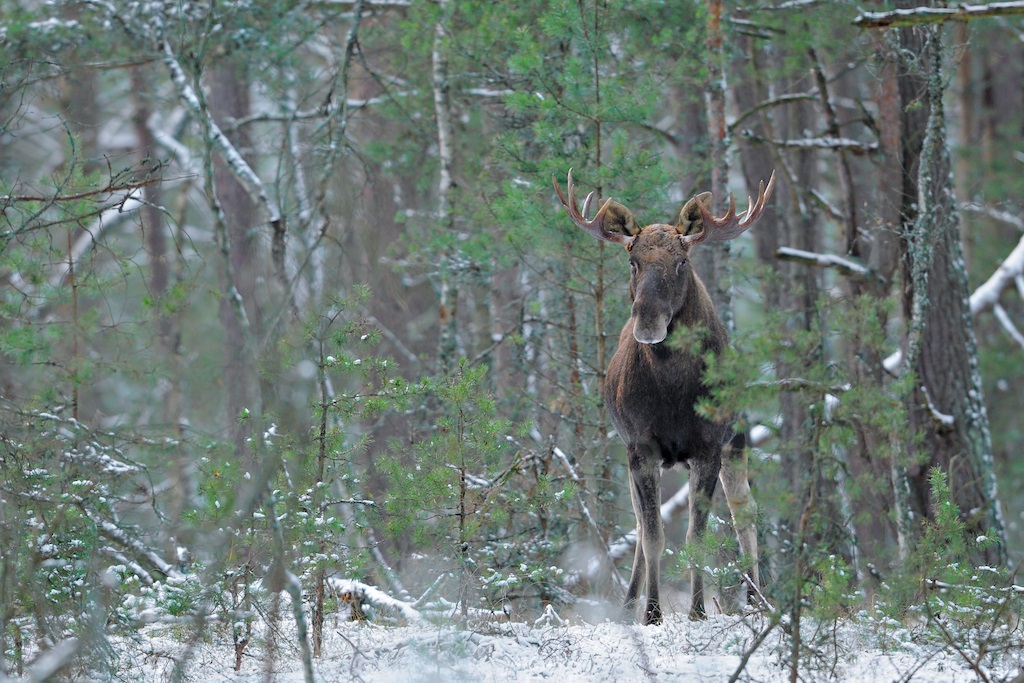
The moose's antlers (found only on males) are the most striking feature of this animal and can be of different types: shield-shaped - wide, spreading like a palm, with forked edges - and branched antlers - narrower, resembling forked branches. The type of antlers a particular moose has depends on its age, health, diet, and genetic traits. Mooses grow their largest and widest antlers in adulthood (between 8 and 12 years of age). Antlers can reach a width of 1.2 - 1.5 m and weigh up to 15 kg. This heavy head ornament serves a purpose during the rut (in September), when males are fighting for females attention. After the rutting season ends, mooses gradually calm down, and in winter, as they do every year, they shed their antlers. The following year's antlers begin to grow between February and April.
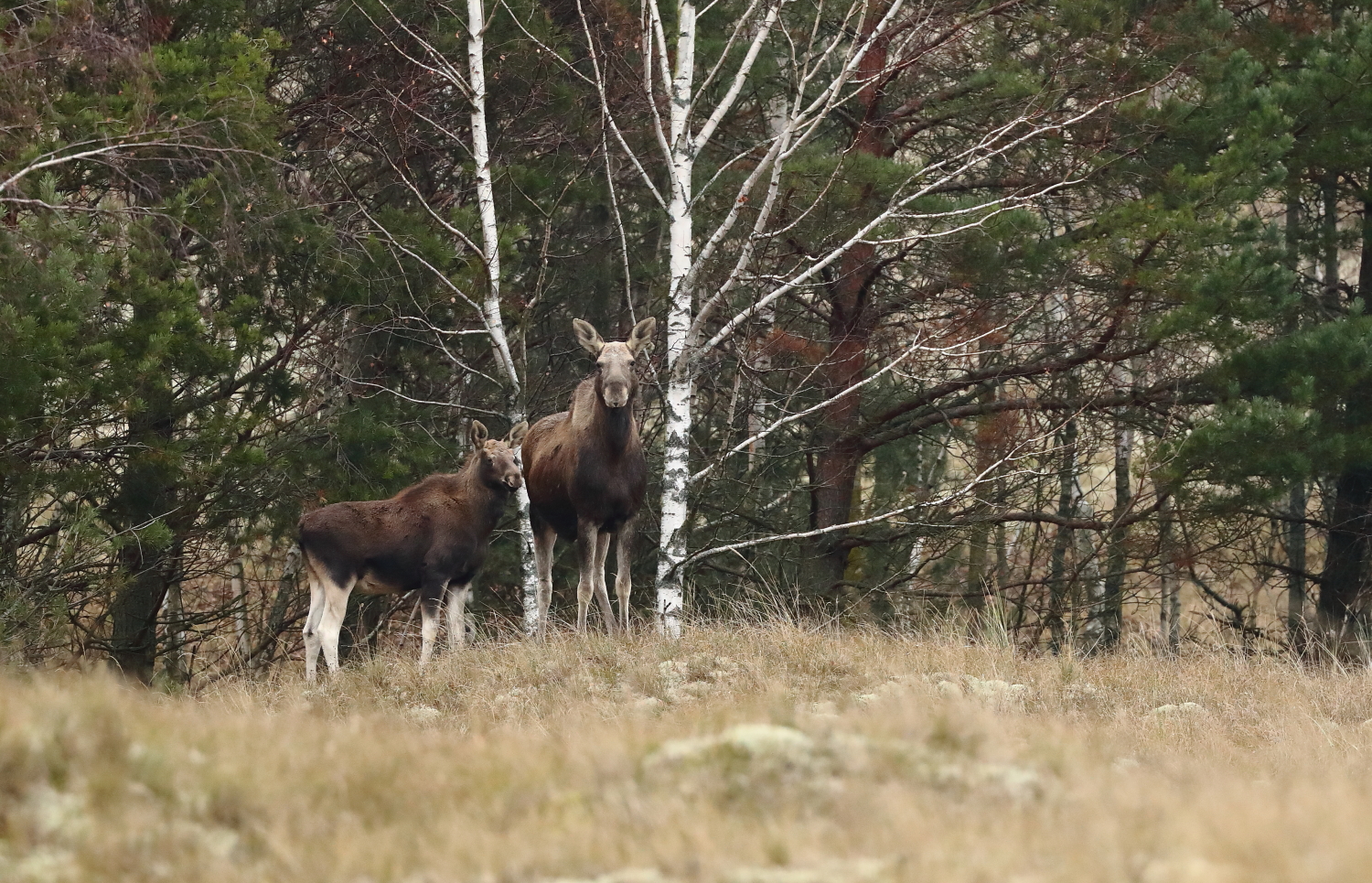
April is the time when more and more food will become available in the forests and meadows. It is important for the mooses to regain their strength after the hardships of winter; bulls will grow new, larger antlers, and the cows will soon face the responsibilities of motherhood - they will give birth to their calves in late spring.
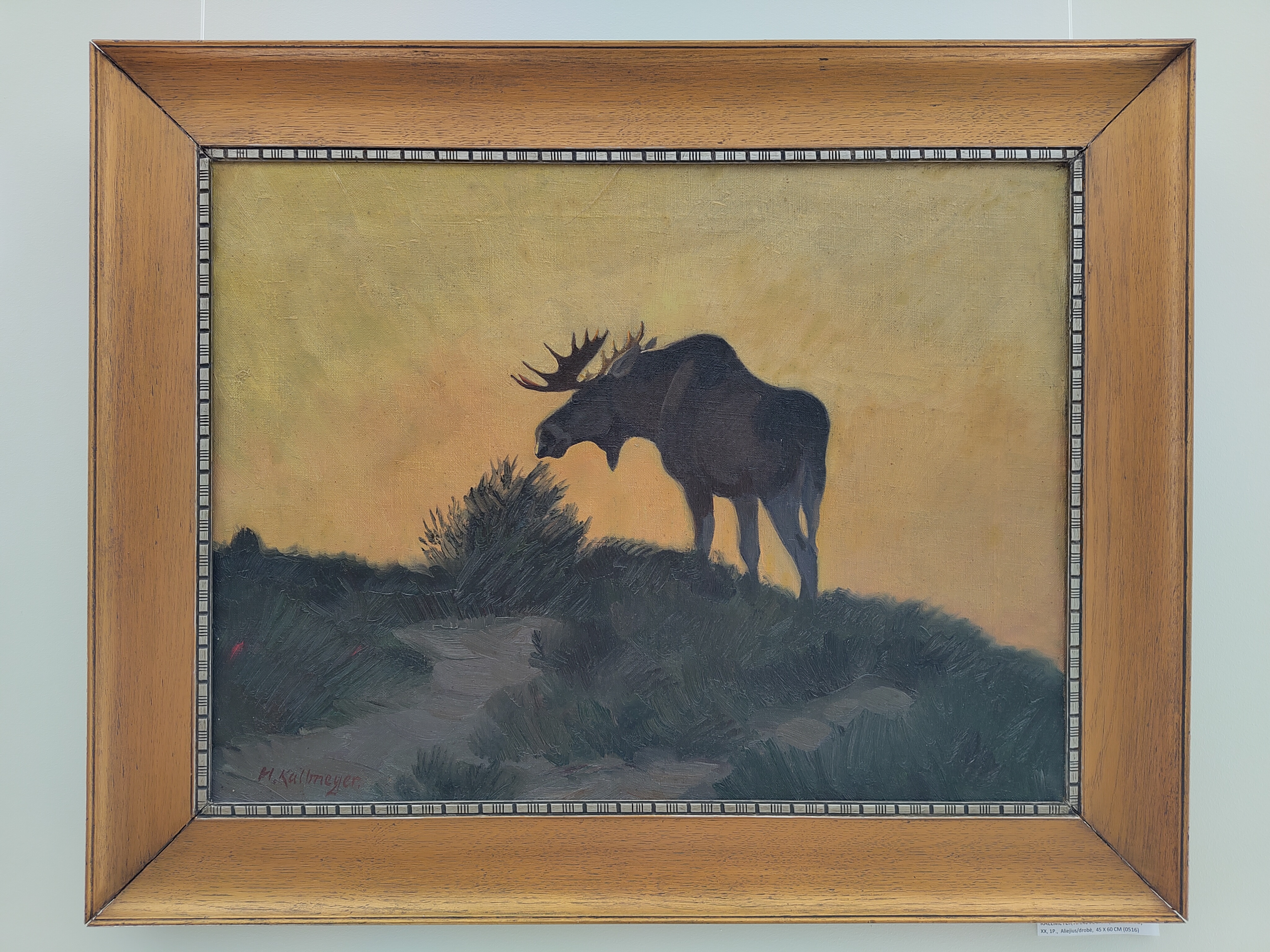
Mooses have long captivated people with their majesty and calm demeanor. This animal is a common subject in old photographs, postcards, artists’ works, and souvenirs from the Curonian Spit. The moose was a symbol of longevity, strength, and the power of nature. To people, it seemed like a living symbol of the Curonian Spit’s forests.
Photos by Kornelija Dambrauskienė, Stasys Kupliauskas, and Vytautas Knyva.
Last updated: 14-07-2026
Related news:
Winter Challenges for the Seashore of the Curonian Spit
What Does the Administration of the Curonian Spit National Park Do?