

UNESCO status of Curonian Spit
UNESCO - The United Nations Educational, Scientific and Cultural Organization was founded on November 16, 1945, immediately after World War II, with the aim of promoting awareness among nations and a culture of peace after the destruction caused by the war.
The cultural and natural heritage, protected by UNESCO is an invaluable asset of every nation and all of humanity, revealing its identity and having great significance in world history. The values included in the World Heritage List are of exceptional universal value, and their preservation is a concern for all nations of the world, regardless of the territory in which they are located. In 2023, there are 1,199 properties in 168 countries on the UNESCO World Heritage List.
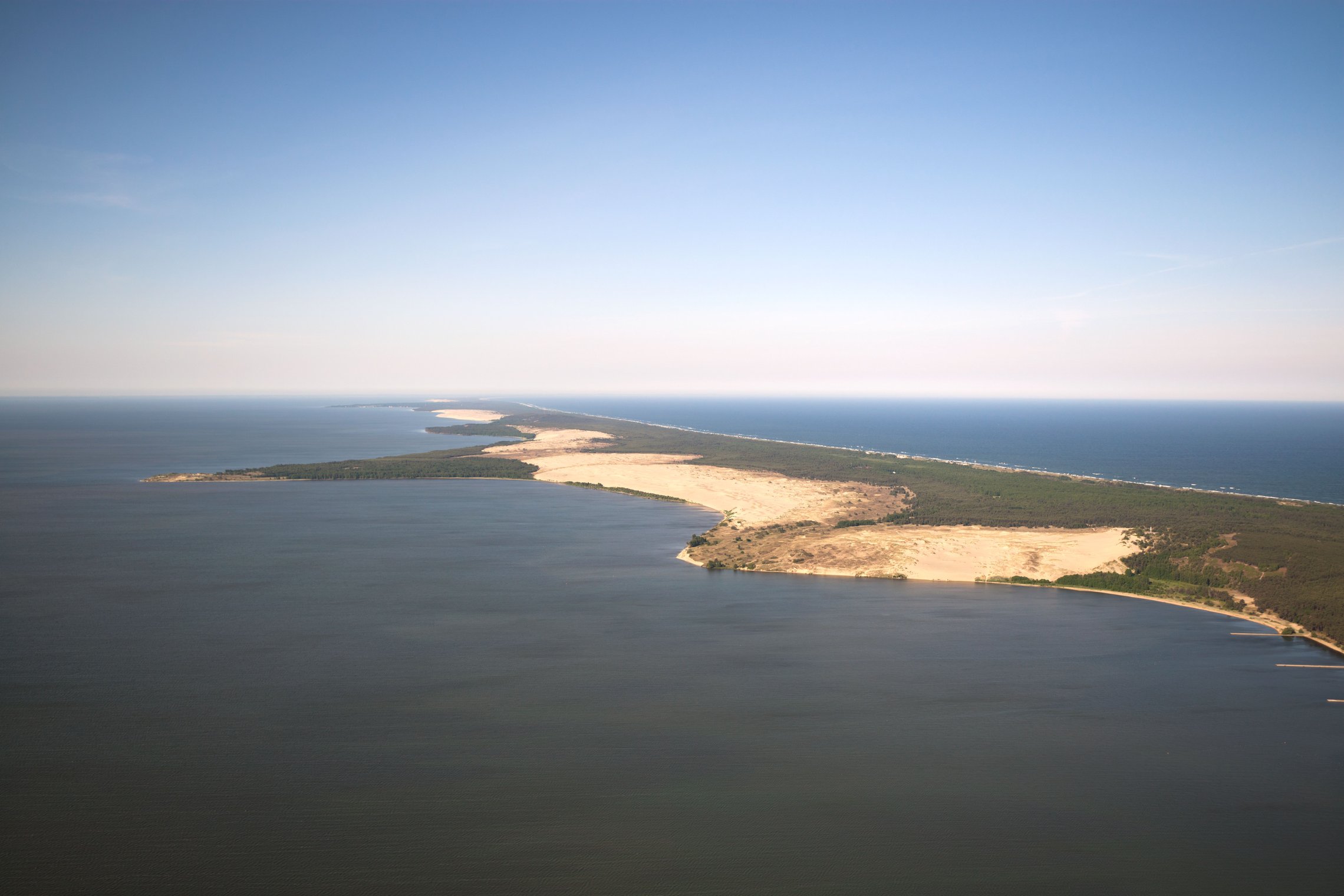
The Curonian Spit, an exceptional creation of man and nature located in the territory of two countries, was inscribed on the UNESCO World Heritage List in 2000 as a cultural landscape site. The history of the Curonian Spit dates back more than 7,000 years. Throughout this period, the peninsula was threatened by natural forces, and later by irresponsible human activity. Intensive deforestation, livestock grazing, resin and charcoal production, logging, and forest fires since the 16th century have led to enormous changes in the landscape. Due to the significant reduction in forest area, sand deposited by the sea formed new shifting dunes, covering parabolic dunes, forest remnants, and ultimately historic villages. This massive sand movement was only stopped by the large-scale dunes. Reinforcement and landscaping works stabilized the landscape of the spit only at the end of the 19th century. Permanent fishing settlements were established here, the development of the resort became increasingly important, and the cultural landscape became the most important recreational resource.
The highest possible international rating was given to the Curonian Spit based on criterion (v):
"The Curonian Spit is an exceptional example of a sand dune landscape, the survival of which is constantly threatened by natural forces (wind, tides, and waves). After disastrous human intervention, which nearly destroyed the spit, it was restored thanks to the enormous protection and reinforcement works that began in the 19th century and continue to this day."
The valuable features recognized as having exceptional universal value in the cultural landscape are:
- the easily damaged cultural landscape of the coastal spit, with its coastal settlements, expressive panoramas, and silhouette from the Curonian Lagoon;
- examples of human efforts that have stopped the movement of sand and restored suitable living conditions: the coastal protective dune ridge, the planted parts of the Great Dune Ridge, and the planted forests and pine forests;
- natural heritage: the expressive Great Dune with its sandy and gray dunes, old-growth forests, unique sand dune flora and fauna, coastal spits and bays, bird migration routes, and coastal shores;
- authentic archaeological, architectural, maritime, and ethnocultural heritage of the Curonians, highlighting the unique atmosphere of the cultural landscape;
- traditions, spirituality, and local lifestyles that have developed over various historical periods, shaped by fishermen, and later by artists, scientists, sailors, gliders, and travelers.
The exceptional universal value of the Curonian Spit is constantly monitored by the international community. Since 2000, the World Heritage Committee has adopted as many as 12 decisions, two ICOMOS response missions have been carried out (in 2001 and 2015), and as many as 14 analyses of the current state have been prepared. The Ministry of Environment of the Republic of Lithuania is responsible for the protection of the Curonian Spit in Lithuania, while the local administrator, the Curonian Spit National Park Directorate, is responsible for the management of the World Heritage site within its territory. The contact person is Kamile Rožė Levulė, a specialist in UNESCO issues (e-mail: [email protected]).
Last updated: 17-06-2026